


Smart Equipment & IoT Platform
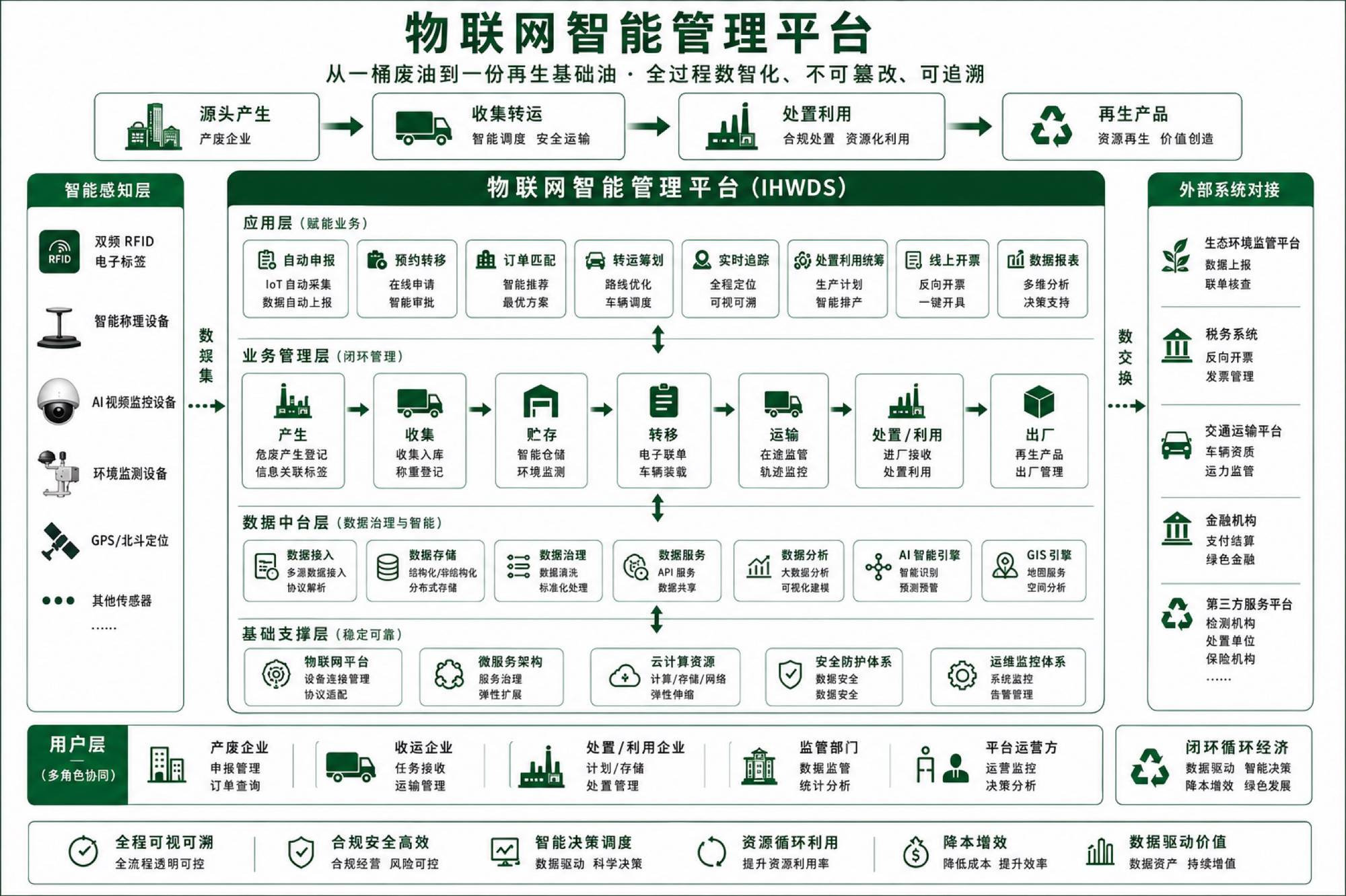
Self-developed smart hardware captures data on site, while the "IoT + Hazardous Waste" Intelligent Management Service Platform (IHWDS) handles dispatch, electronic manifests, and compliant settlement — an integrated hardware-software system that gives hazardous waste end-to-end traceability with a single code, from generation to regeneration.
Making Data Traceable from the Moment It Is Generated.
In conventional hazardous waste collection and transport, the data gap lies in the physical steps between drum and truck — manual transcription, fouled QR codes, and the difficulty of bulk reading all break the chain.
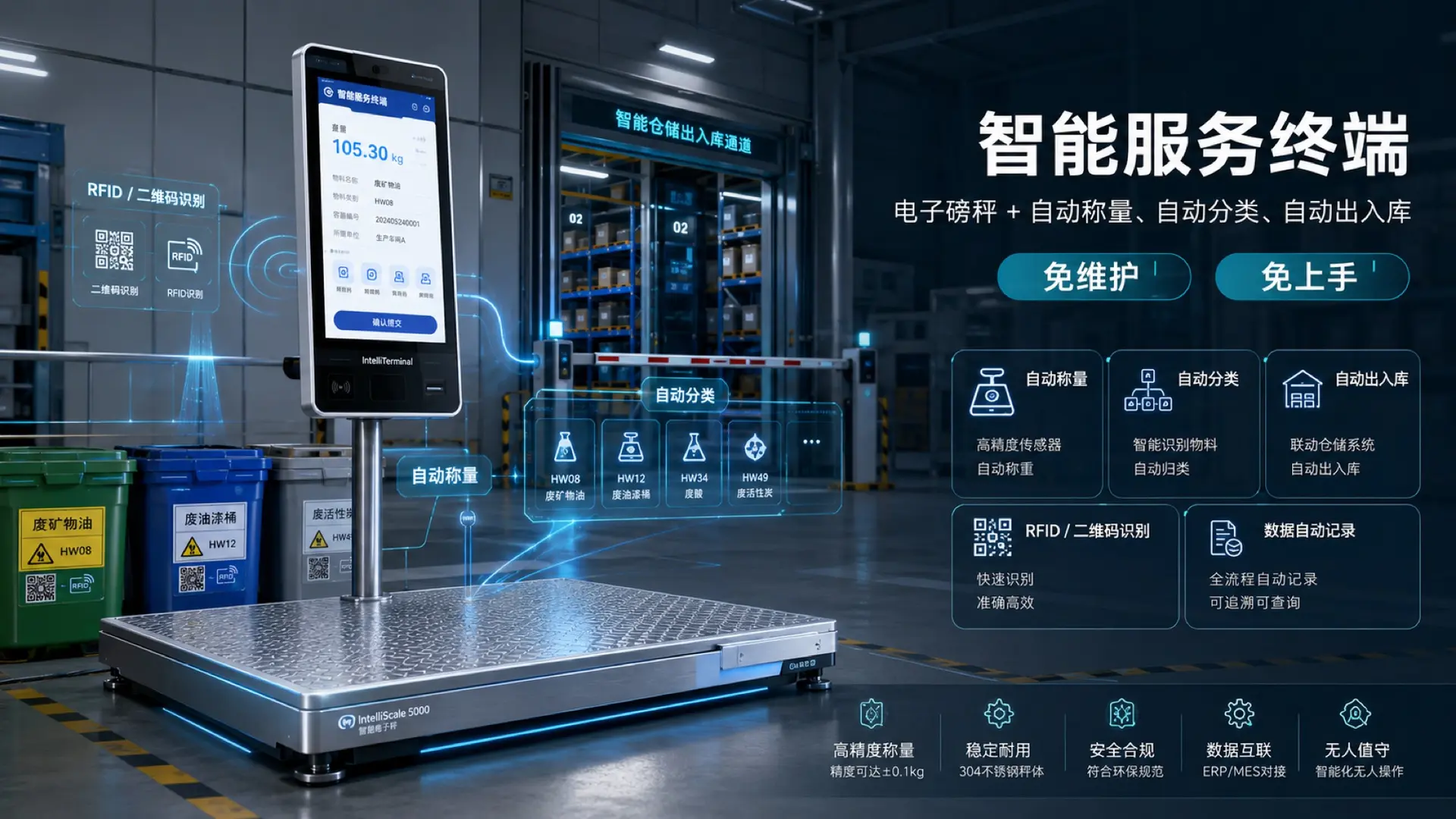
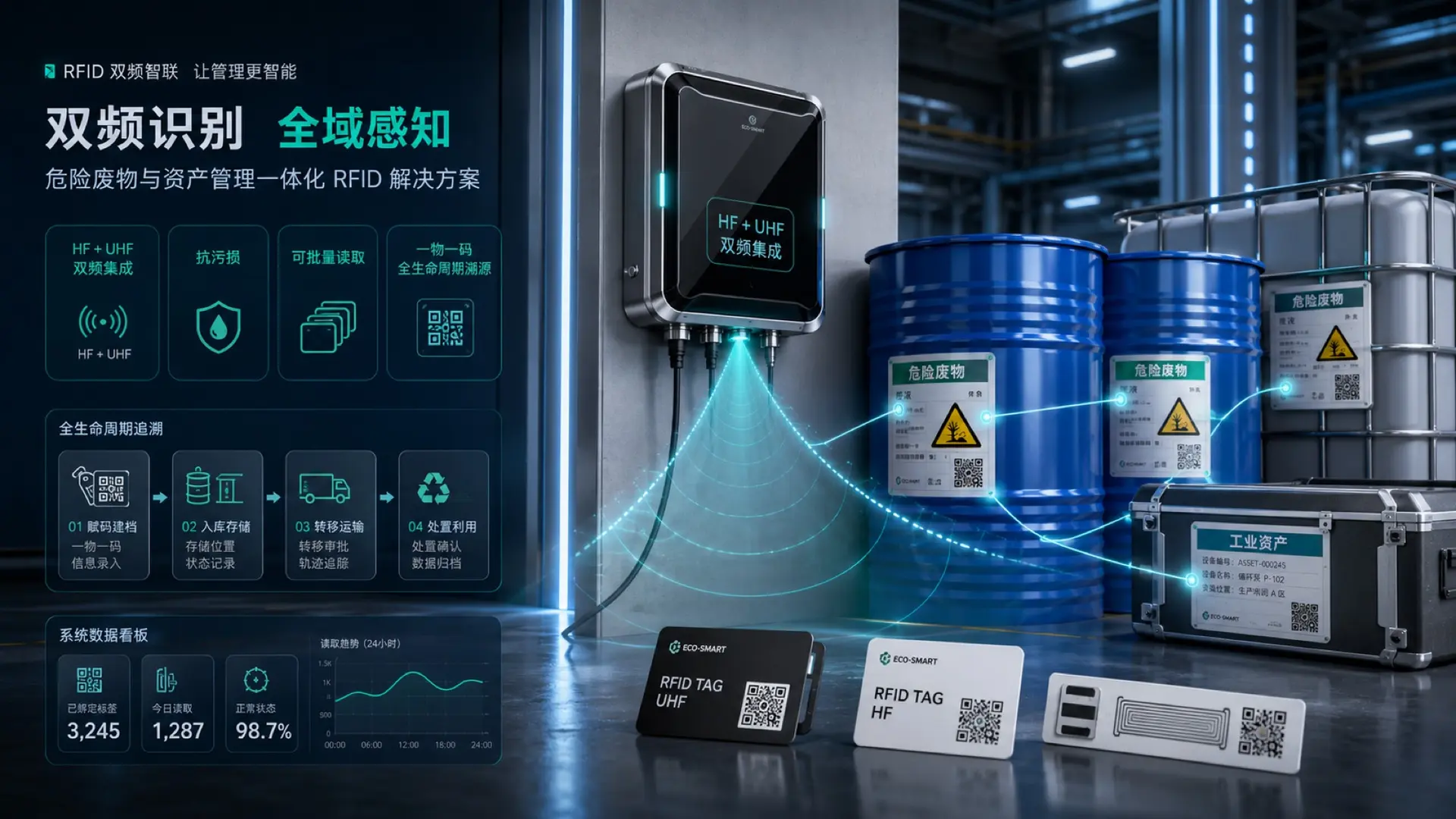
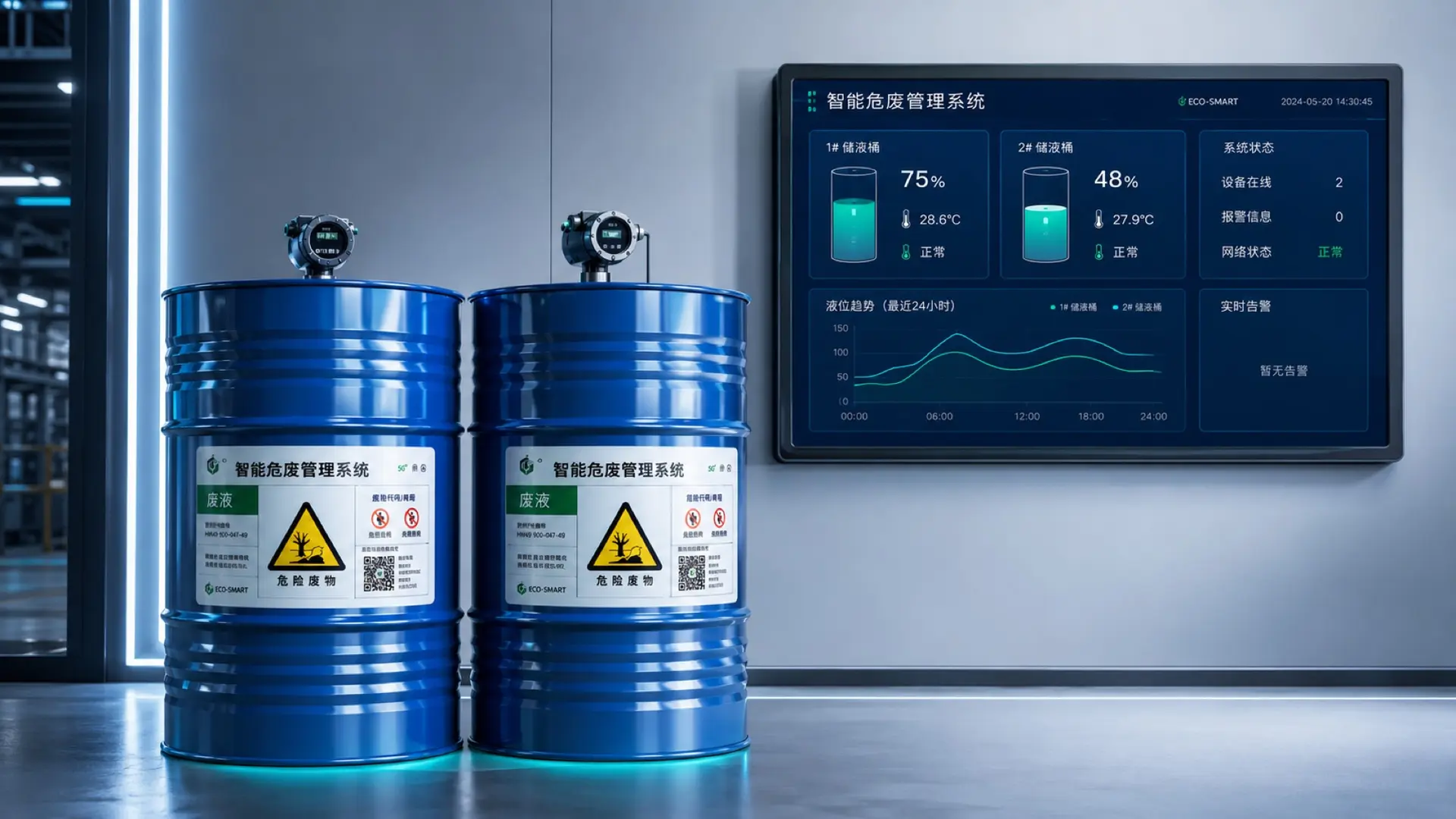
Molyfor moves data capture forward to the hardware layer: dual-frequency RFID tags handle bulk reading and fouling resistance, smart drums provide real-time level monitoring and alerts for liquid storage, and smart service terminals turn weighing, classification, and inbound/outbound booking into a single-step operation.
Working with the IHWDS platform, the trio carries "one item, one code" through the full lifecycle: generation, collection and transport, temporary storage, disposal, and regeneration.
Tags, Containers and Terminals — One Integrated Capture Layer.
Dual-Frequency RFID Tag
Integrating HF and UHF bands in one tag, fouling-resistant and readable in bulk; a unique code per item runs through the full waste lifecycle — among the first engineering implementations of full-chain hazardous waste traceability.
Smart Drum
A dedicated container for the compliant collection and storage of liquid hazardous waste, with real-time level monitoring and automatic alerts, visualized on both PC and mobile.
Smart Service Terminal
With an integrated electronic scale, it weighs, classifies, and books items in and out automatically; on-site operations are completed in one step, with no manual data entry.
Three Flows in One, One Code End to End.
Molyfor treats "IoT + hazardous waste" as its underlying language: smart terminals handle identification, metering, and data capture at the point of waste generation; RFID tags bind every batch of waste to a physical credential that can be captured in bulk; smart weighing and vehicle dispatching bring the transport stage under real-time supervision; and electronic manifests together with compliant settlement complete both settlement and supervision within a single system.
Logistics, information, and funds converge as three flows in one, with end-to-end traceability through a single code across the entire chain: every action leaves a compliant record and settles through compliant channels.
Six Core Modules.
Smart Terminals
Identification, metering, and data-capture devices at the point of waste generation, serving as the starting point of each manifest.
RFID Tags
Dual-frequency RFID tags enable automated bulk capture, resolving the smudging and occlusion problems of QR codes.
Smart Weighing
Networked weighing equipment connects directly to the supervision platform, eliminating deviations from manual verification.
Vehicle Dispatching
Real-time dispatching and route monitoring of hazardous waste transport vehicles.
Electronic Manifests & Ledgers
Electronic manifests and ledgers are generated automatically at intake, transfer, disposal, and regeneration.
Compliant Settlement
Supports online payment and reverse manifests. Under STA Announcement No. 5 of 2024, Molyfor, as a licensed resource recovery enterprise, issues reverse invoices online to individual sellers, addressing the industry-wide difficulty of obtaining invoices at the source-collection stage.
Request an Equipment and Platform Integration Plan.
Waste generators, industrial parks, and regulators can adopt hardware data capture and platform supervision capabilities by scenario; for the core technology system, see the HyFine technology page.